
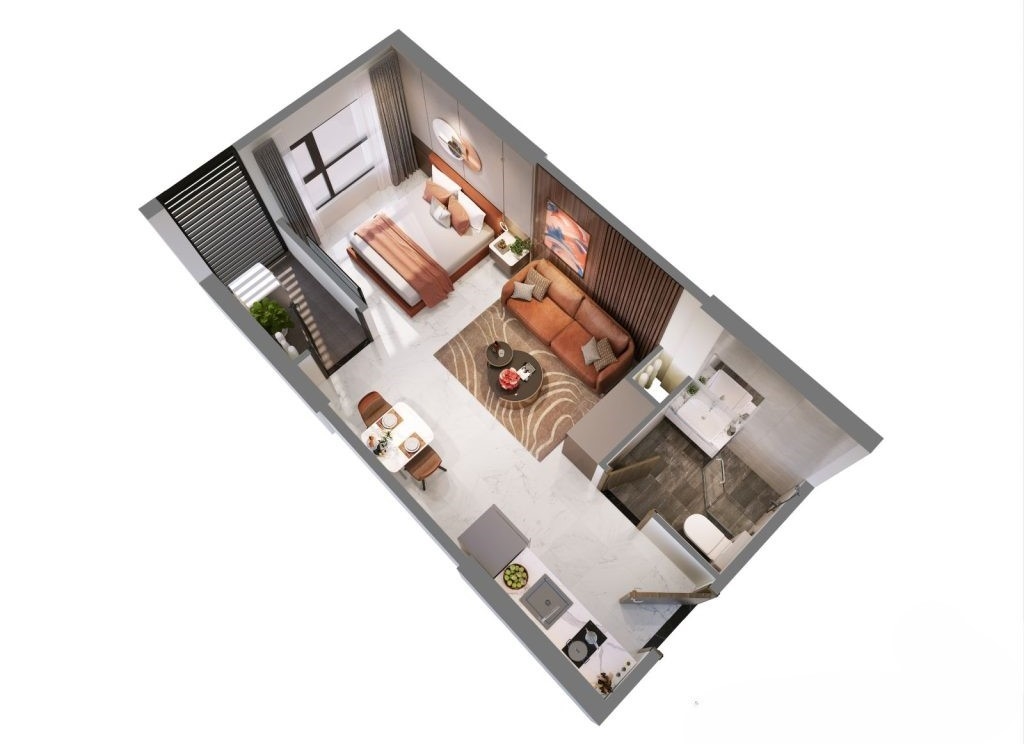
Studio apartments have surged in popularity in Vietnam in recent years. Within the real estate market, this model has become one of the top-selling residential types. However, effectively configuring the interior for such a compact space remains a challenge for many.
To provide you with inspiration for your own home, join LavieHome in exploring smart and functional interior layouts tailored specifically for studio apartments.
1. Understanding Studio Apartment Interiors
1.1 What is a Studio Apartment?
A studio apartment is a small-scale residential unit featuring an open-plan layout that integrates the living room, bedroom, and kitchen. By eliminating partition walls, this design creates a sense of spaciousness and enhances lifestyle efficiency.
Often referred to as “smart apartments” or “efficiency units,” these spaces are ideal for single occupants. The term “studio” highlights its defining characteristic: the lack of clear boundaries between different functional zones. Due to their convenience and affordability, they have become highly attractive to the younger generation.
1.2 Interior Characteristics and Floor Area
In Vietnam, typical studio apartments range from 35–40 m² in standard projects, reaching up to 60 m² in luxury developments. Consequently, the interior must be meticulously designed to maximize spatial utility.
Key functional areas—living, sleeping, and dining—are unified within a single open space. Only private areas, such as the bathroom, are enclosed. Typically situated in prime city centers for convenient commuting, these units often have a land-use term of 20 to 25 years.
1.3 Key Advantages of Studio Interiors
Seamless Integration: The lack of walls ensures all areas are easily accessible, fostering an expansive atmosphere.
Scientific Design: Despite the open layout, studios are organized logically and can be adapted to various aesthetic styles without compromising comfort.
Cost-Efficiency: As one of the most affordable housing options, they are ideal for young professionals or small families with moderate incomes.
Low Maintenance: Smaller footprints mean less furniture is required and cleaning time is significantly reduced.
Resource Conservation: Occupants can save considerably on utilities (electricity and water) due to the compact nature of the space and lower energy requirements.
2. Essential Interior Components
Bedding Solutions: A central element. Options include Murphy beds (fold-away) or storage beds to utilize the space underneath. Size, material, and functionality are the primary considerations.
Common Living Area: Usually consists of a sofa, a coffee table, and minimalist decor. In smaller units, this serves as a multipurpose lounge-and-guest area.
Integrated Kitchen: Features streamlined appliances like induction hobs, compact refrigerators, and multifunctional furniture—such as stone-top dining tables that double as food prep surfaces or workspaces.
Bathroom: While modest in size (typically from 15 m²), it focuses on essential fixtures like showers to maintain privacy and comfort within a limited footprint.
Smart Storage Systems: The hallmark of studio design. Custom-built, foldable, or pull-out cabinets and shelving are vital for organizing belongings without cluttering the floor.
Smart Electronics: Wall-mounted TVs, wireless audio, and adjustable smart lighting systems enhance the modern convenience of the apartment.
3. Strategies for an Optimal Layout
3.1 Define a Consistent Style
Selecting a unified design language—such as Minimalism, Scandinavian, Industrial, or Modern Korean—prevents the space from feeling cluttered. A cohesive theme ensures a seamless flow between functional zones.
3.2 Maximize Every Square Inch
Architects prioritize “dead spaces” such as corners, high ceilings, and under-floor areas. Utilizing vertical space for storage or decor allows the floor plan to remain open for relaxation.
3.3 Harmonious Color Palettes
Colors profoundly impact the perception of space. We recommend applying the 60-30-10 Rule:
60% Primary color (walls and floors)
30% Secondary color (large furniture)
10% Accent color (decor and highlights)
Light, neutral tones are preferred to make the room feel larger.
3.4 Leverage Modular and Smart Furniture
Modular furniture is the “lifesaver” for small studios. Items like pallet beds, convertible sofas, and flat-pack desks provide flexibility, ease of transport, and significant cost savings.
3.5 Optimize Natural Light
Large windows or skylights are essential. Natural light not only improves well-being but also creates highlights and shadows that accentuate the textures and materials used in the interior.
4. Key Decorating Tips
Translucency: Use sheer curtains and glass partitions to maintain light flow.
Bright Tones: Stick to whites, light grays, or pastels.
Functionality First: Avoid over-furnishing. Only keep essential, multi-use items.
Vertical Decor: Use wall-mounted shelving or art to save floor space.
Biophilic Elements: Incorporate indoor plants to refresh the air and add a vibrant, natural touch to the compact environment.
5. Conclusion
A well-designed studio apartment is a perfect blend of aesthetics and utility. By following these professional layout strategies from LavieHome, you can transform a modest area into a sophisticated sanctuary.
Contact LavieHome today for expert consultation and exclusive offers on premium interior solutions!